
A held bass note is the easiest note to play and the easiest one to make sound dead. You pluck it, it rings at one volume and one pitch, and it fades. That is fine for a fast line, but on a whole note or a long root under a chord change, it sounds mechanical.
Three small habits change that: a slow vibrato from the fretting hand, a slide into the note, and control over how hard you pluck. This article covers all three using one note you already know, so you can hear the change on something familiar. If you want to know how to play vibrato on bass guitar, start here, with the note and not with a fast phrase.
Why a held bass note sounds lifeless (and what expression actually adds)
A plucked string has a loud attack and then a steady decay. Nothing changes during the decay unless you change it. Singers, horn players and violinists shape a long note while it sounds, and that shaping is what listeners hear as feeling.
On bass you have three things to shape a note:
- Pitch: a small, regular wobble in pitch (vibrato) gives the note movement while it rings.
- Arrival: how the note begins. A slide from a nearby fret makes it feel approached rather than dropped in.
- Volume: a soft pluck and a hard pluck produce different volume and a different tone from the same fret.
All three are controlled mostly by feel. None of them requires new notes, a new scale or a faster hand. They ask you to listen to a single note for longer than you normally do.
Your first vibrato: the wrist-and-finger wobble on a single fretted note
Pick a note you can fret without thinking. The 5th fret on the E string (an A) works well because the frets are wide enough to leave room for your finger to move. Use your first or second finger, whichever is stronger.
Place the fingertip just behind the fret wire, not on top of it, and press enough to get a clear note. Pluck once and let it ring. While it rings, rock your finger very slightly so the pitch rises and falls a little.
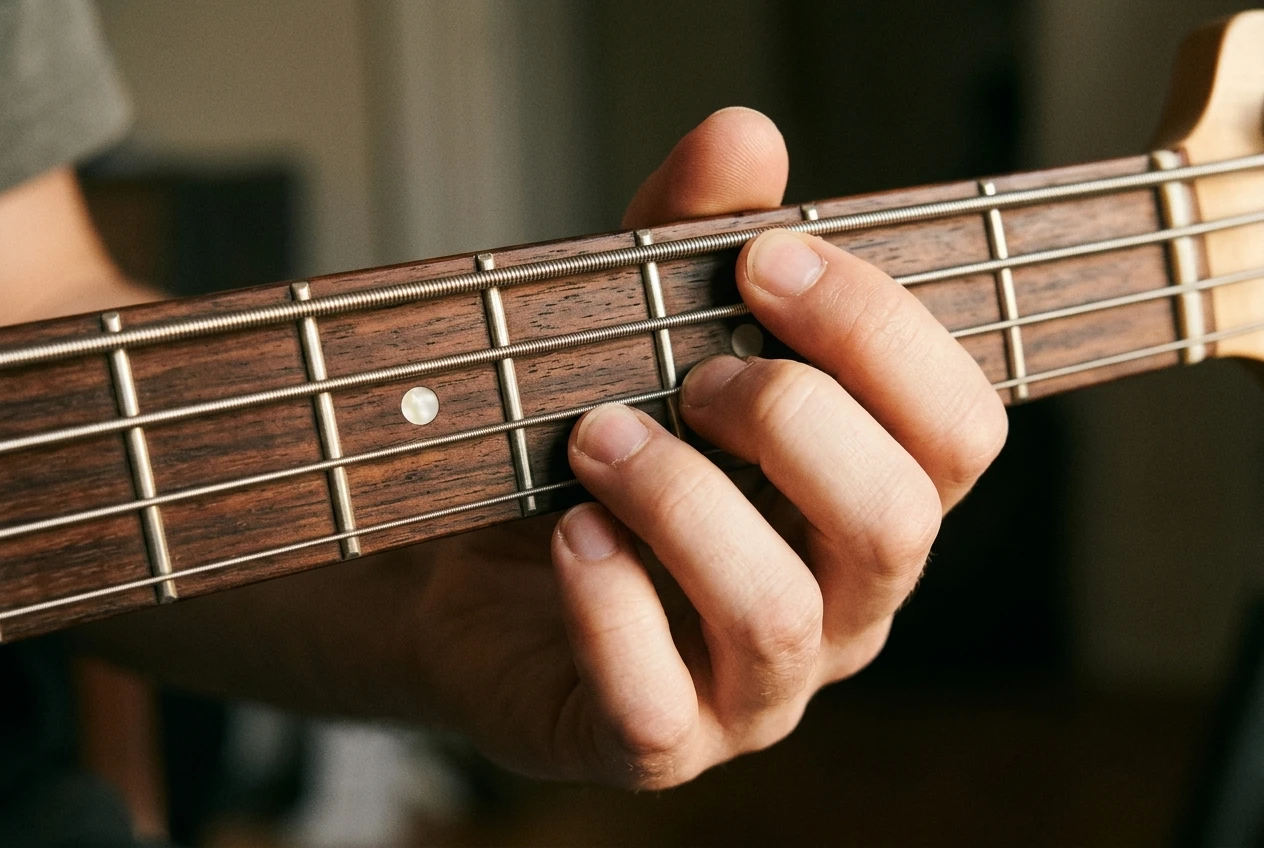
Keep these points in mind:
- Move from the wrist and forearm, not only the finger joint. A tiny finger-only motion usually produces no audible change on thick strings. A gentle wrist rotation gives the motion more range.
- Keep the thumb relaxed behind the neck. If you squeeze the neck, the motion becomes stiff and shaky.
- Aim for a small pitch change. A narrow wobble sounds controlled. A wide one sounds seasick.
- Let the note ring first. Hold the pitch steady for a moment, then start the wobble. Starting the vibrato late sounds natural, because most players begin it after the attack.
Do this for a minute without worrying about speed. You are teaching your hand the motion.
Pull-and-push versus side-to-side: which vibrato motion suits a bass
There are two common ways to move the string, and bass players use both.
Pull-and-push moves the fingertip along the length of the string, toward the bridge and back toward the headstock. The motion is small and the pitch changes slightly because the string tension shifts a little. It works well on thick bass strings because it does not ask you to bend a heavy string far.
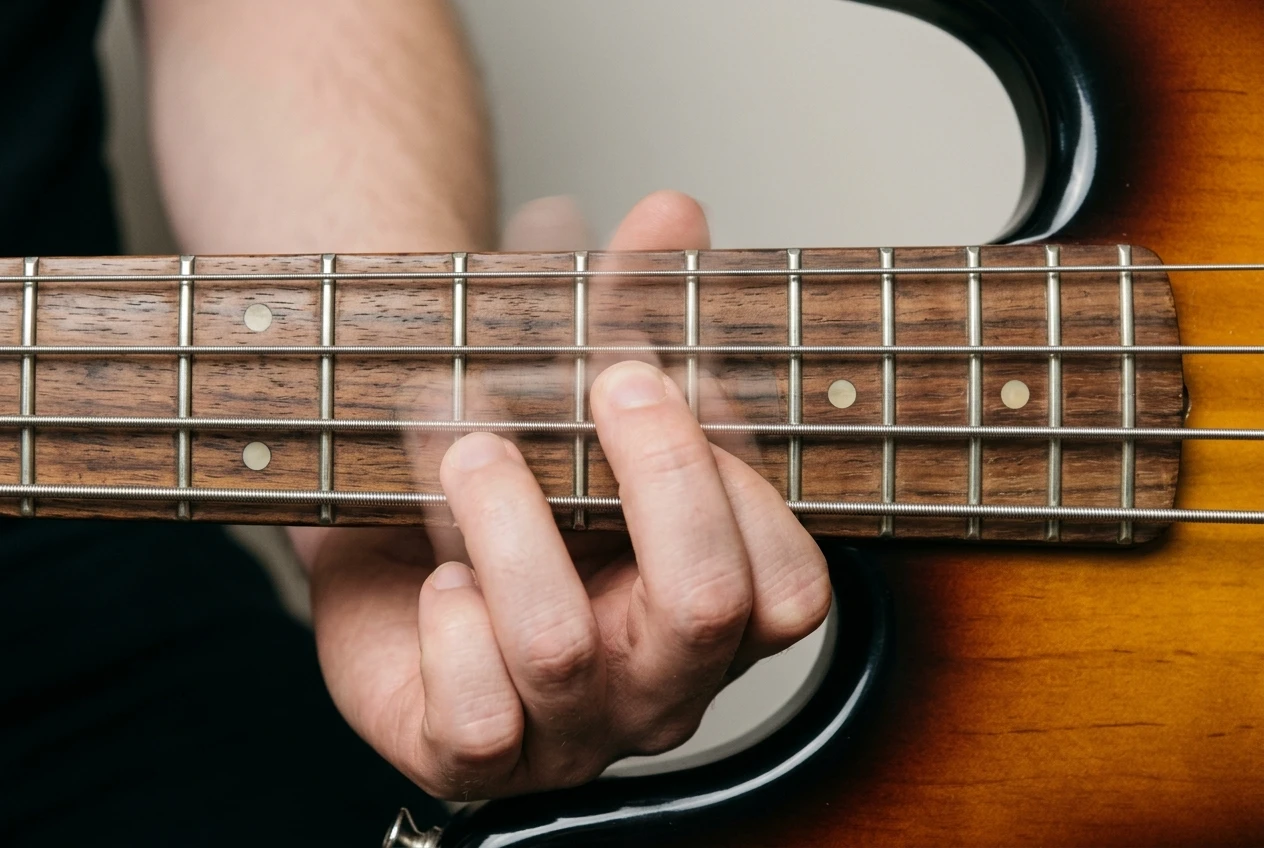
Side-to-side moves the fingertip across the neck, bending the string a tiny amount toward and away from the neighbouring string. It is the motion most guitar players know. On bass it takes more strength and the string can buzz or bump into the string beside it if you push too far.
For a beginner, start with pull-and-push. It tends to be easier on the fingers and produces a gentler, steadier wobble. Once it feels comfortable, try the side-to-side version on the same note and compare. Keep whichever sounds more even to you; there is no rule that says you must pick one for good. Strings, action and hand size all influence which is easier, so trust your ears over any diagram.
Keeping vibrato in time: matching the wobble speed to the tempo
A vibrato that wanders in speed sounds nervous. A vibrato that locks to the tempo sounds deliberate, and on bass, where your job is to sit in the groove, that matters more than on most instruments.
A simple way to set the speed is to tie it to the beat:
- One wobble per beat: each up-and-down cycle takes one beat. This is slow and suits ballads and long root notes.
- Two wobbles per beat: each cycle takes an eighth note. This is a medium vibrato, good for held notes at moderate tempos.
- Triplet wobbles: three cycles per beat, which is faster and works for more intense moments.
Set a metronome to about 60 to 70 beats per minute and fret your A. Pluck, let the note settle, then wobble once per beat so the pitch peak lands on each click. When that feels steady, try two per beat. Beginners often speed up without noticing, so the click tells you when it happens. The slower speeds are the better place to start, because slow vibrato is the hardest to keep even, and it is also the one that sounds most musical on bass.
Sliding into notes and letting them breathe
A slide changes how a note arrives. Instead of landing on the A at the 5th fret, start at the 3rd fret, press down, pluck, and slide up to the 5th while the note is still sounding. The ear hears a small glide into the target rather than a sudden start.

Practice it in three versions:
- A short slide from one fret below. This is subtle and fits almost any line.
- A longer slide from two or three frets below. It sounds more dramatic and works at the start of a phrase.
- A slide down from above. Pluck the note at the 7th fret and glide down to the 5th so the note settles.
Two details make slides sound good. Keep the pressure steady the whole way, so the note does not die or buzz mid-slide. And time the slide so it finishes right on the beat you are aiming for, not after it.
Letting the note breathe is the other half. Many beginners clamp down hard and then cut the note short or let go abruptly. Try easing finger pressure gradually at the end of a long note so it fades out rather than stopping with a click. Then leave a tiny gap before the next note. A small amount of space around a note makes the line sound more relaxed and more confident.
Playing softer and harder: using pluck strength as expression
Pluck strength is the third habit, and it is the one most players underuse. A string plucked gently has a rounder, quieter sound. The same string plucked firmly is louder and has more bite and attack.
Try this on your A:
- Pluck very softly and listen to how quiet and smooth it is.
- Pluck at a medium strength, which is your normal level.
- Pluck firmly, without snapping the string against the frets.
Notice that the pitch and the fret are identical, yet the three notes sound like they belong to different moods. Quiet plucks suit verses and tender passages, and firm ones suit choruses and moments that need weight. You can also move gradually between them across a few bars, getting a little louder as a section builds.
The skill here is consistency. Practise a soft note, then a medium one, then a firm one, and try to make each one sound the same every time you repeat it. Control is more useful than volume. For right hand patterns and finger choices, the focus here is only on how hard you pluck, so the pickup and tone settings on your bass are worth a look separately if you want to change the sound further.
A five-minute daily routine for expressive sustain
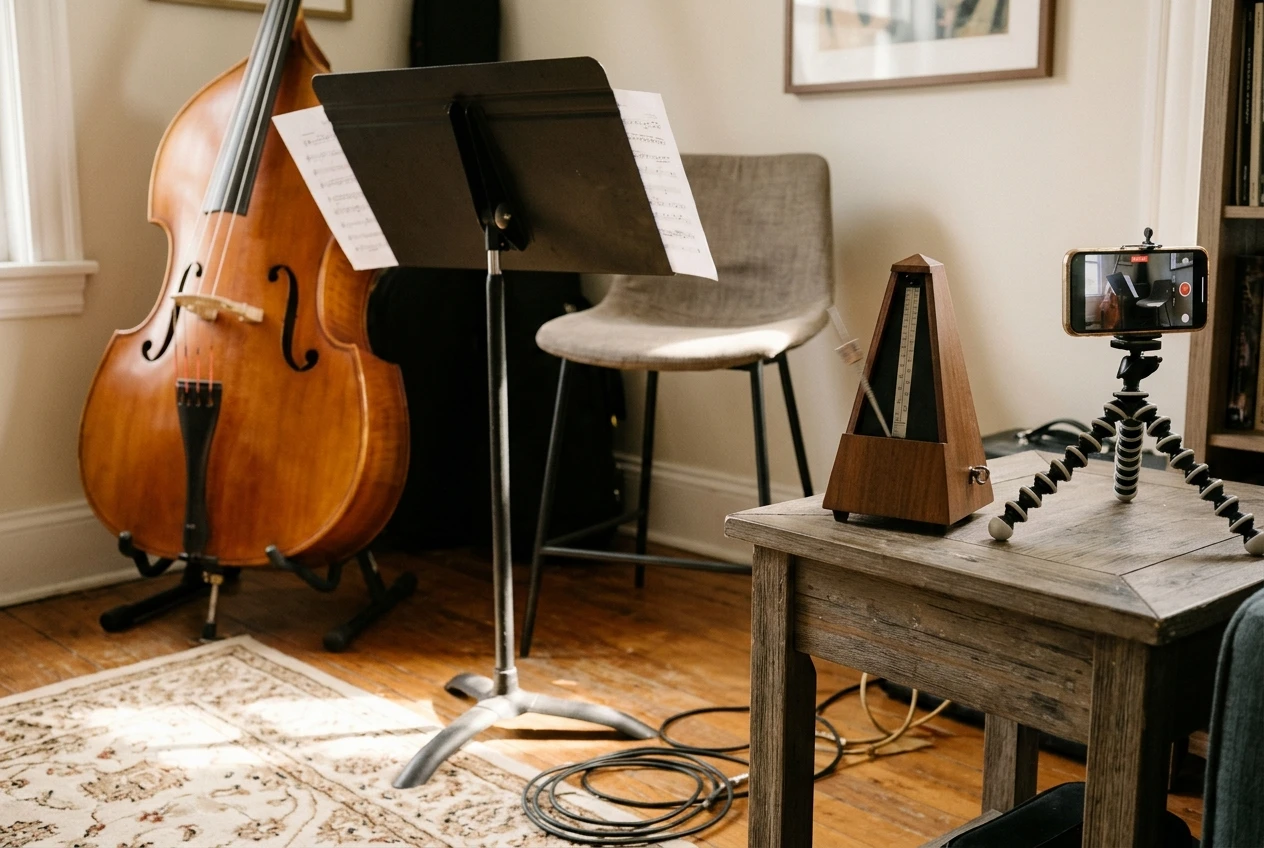
This routine uses a single note, so there is nothing to memorise. Set a metronome to about 65 beats per minute. If your fingers feel stiff, a few of the finger exercises for bass guitar beforehand help warm them up.
- Minute 1: the plain note. Pluck the A at medium strength and let it ring for four beats. Listen to how it sounds without any shaping. This is your reference.
- Minute 2: vibrato. Pluck, hold steady for one beat, then add a slow wobble of one cycle per beat. Repeat, then try two cycles per beat.
- Minute 3: slides. Slide into the A from one fret below, then from two or three below, then slide down from above. Land on the beat each time.
- Minute 4: dynamics. Play the same note soft, medium and firm. Repeat the sequence and try to keep each level consistent.
- Minute 5: put it together. Slide into the note, hold it for a beat, add a vibrato, and let it fade by easing finger pressure at the end. Play the plain version again to hear how much has changed.
Record yourself on a phone once a week. Playing the recording back is more honest than memory, and it shows you whether your vibrato stays even.
Common vibrato mistakes and how to fix them
Vibrato that is too fast. It sounds nervous and drifts out of time. Slow it down until it matches one wobble per beat.
Vibrato that is too wide. The pitch swings far enough to sound out of tune. Shrink the motion until the note still sounds like the same pitch.
Only bending sharp. If the wobble pushes the pitch only upward, the note sounds like it is straining. Aim for a movement that goes slightly above and below the true pitch, or at least returns cleanly to it.
A squeezed neck. A tight thumb and clamped hand tire quickly and make the motion jerky. Loosen your grip until you use only the pressure needed to fret the note.
Fingertip on the fret wire. The note buzzes or dies when you move. Keep the fingertip just behind the fret.
Starting the wobble at the attack. It can sound unnatural and muddy the start of the note. Let the note speak first.
Losing the beat. Concentrating on the left hand can make the right hand rush or drag. Slow the tempo and use the metronome click until the two hands stay together.
If a mistake persists, go back to the plain note, listen to it, and rebuild the wobble more slowly. Expression comes from small, controlled movements, and they sound better once they are steady.
Try it in Bass Skills Studio
Try the single-note routine from this article in Bass Skills Studio, the free practice app, then come back and read how to use a metronome to keep your vibrato in time.