Music theory can be a game-changer for bass players. It’s not just about playing notes. It’s about understanding how your bass fits into the bigger picture. When I got serious about playing bass, learning some basic theory really helped me write better lines, jump into jams, and communicate with other musicians. Here’s a practical guide filled with all-in-one basics of music theory, tailored for anyone ready to make their bass playing a lot more fun and creative.
Why Music Theory Matters for Bass Players
Knowing music theory is super useful for any bass player. It shows you how notes work together, what makes grooves sound good, and how you can create bass lines people actually want to hear. Some benefits I’ve experienced myself include:
- Building Your Own Bass Lines: Once you get how scales and chords work, you can make up bass lines that match any style—from rock to jazz to funk—and make them fit right in.
- Improvising With Confidence: Theory removes the intimidation factor. When you understand the notes in a scale or a chord progression, soloing and filling gaps just feels natural and less daunting.
- Jamming and Songwriting: Theory helps you jam along with others easily, write your own songs, and talk about music in a language everyone understands.
Learning a bit of theory definitely helped me show up to band practices feeling prepared instead of lost. It’s worth taking the time to check out these basics.
Foundational Concepts Every Bass Player Should Know
Bass players don’t have to become theory wizards, but a few key basics make life a whole lot easier. Here’s what I found most helpful:
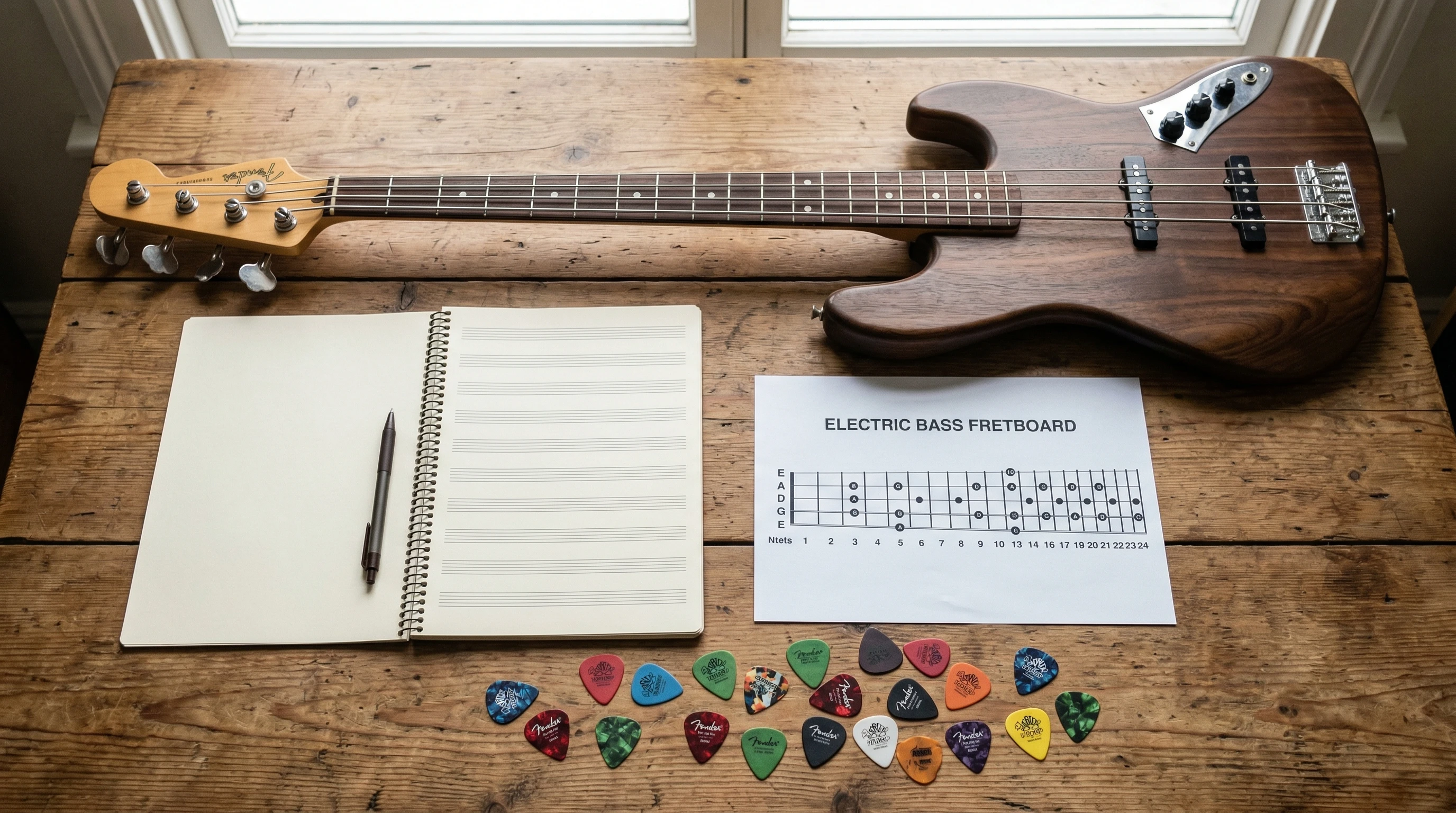
- Notes on the Fretboard: Start with learning the names of the notes on your bass, especially the E and A strings. This small step pays off fast when you need to move around the neck in a hurry.
- Major and Minor Scales: These scales are everywhere in Western music. I always recommend starting with the major scale pattern. Once you know it, moving to minor or other variations is much easier.
- Pentatonic and Blues Scales: Perfect for grooves, solos, and fills. The pentatonic scale, for instance, is in almost every style, from classic rock to hip hop.
- Intervals: Knowing what a fifth sounds like, or how a third feels under your fingers, goes a long way; it also helps you put together new lines without guessing.
- Basic Chord Construction: Understanding how chords are built means you know what notes will work nicely with what’s happening in the song, even if you never play the whole chord.
- Chord Progressions: Lots of songs are just a handful of chords repeated. Recognizing progressions (like the famous I-IV-V) makes it easy to follow along, no matter what’s thrown at you.
It’s a lot at first glance, but focusing on these basics lays a strong foundation that you’ll come back to time and time again. Keeping things simple is a good approach at the start.
Practical Bass Theory: Scales, Chords, and Grooves

Some core elements keep popping up as you get deeper into bass playing. Here are a few that I’ve found especially valuable, with practical ways to apply them straight away:
- Roots and Fifths: If you play in a cover band, you’ll notice most bass lines hang on the root note (the letter-named note of the chord) and the fifth. They create a strong anchor and add movement to your lines.
- Walking Bass: In jazz, walking bass lines use chord tones (often the root, third, fifth, and sometimes seventh) to help you smoothly link one chord to the next. You can adapt these shapes in other genres, too.
- Scale-Based Fills: Fills and riffs often stick to notes within a particular scale; using the pentatonic scale for a fill in blues or rock always feels right.
- Syncopation and Rhythmic Variety: Playing with timing gives your groove life. Try mixing up your rhythms within a scale to see what kind of feel you create.
My own playing improved the most when I started practicing these patterns all over the neck, not just in one spot. Repetition really helps scales and intervals stick and gives your fingers muscle memory for creative bass lines.
Riffs, Rhythms, and Timing. Why They Matter
As the link between the drums and everyone else, the bass is all about solid rhythm. You don’t need wild theory for this, but some basics are really important:
- Time Signatures: Most songs stick to regular patterns like 4/4 or 3/4. Knowing how to count these out keeps your groove locked in, and you’ll never get lost on a funky bridge section.
- Subdivisions: These are the “in betweens” of each beat—think eighth notes, sixteenths, and so on. Understanding them means you’ll groove tightly with the drums, which is the bread and butter of any good bassist.
- Syncopation: Playing off the main beat adds interest to simple bass lines. Many classic bass riffs (like in funk, reggae, and hip hop) use syncopation for that extra push and pull.
Paying attention to the timing of your lines adds as much personality as the notes themselves. It’s really important to listen to the drums and find that pocket where your bass line supports everything perfectly.
Developing Your Musical Ear (Ear Training)
I can’t stress enough how learning to “hear” theory makes everything smoother. Ear training means practicing recognition of intervals, chords, and rhythms by listening—no instrument required.
- Matching Notes: Try picking out a melody on your bass by ear, or see if you can identify the root note of a song just by listening to it.
- Recognizing Chord Changes: Following the bass in your favorite tracks helps you spot when the music mixes it up from one chord to the next.
- Identifying Intervals: Apps and online games can make this part fun. You’ll be surprised how often you use these skills while jamming with others or learning songs.
Your ear is one of your biggest tools as a musician, and regular ear training pays off every time you pick up your bass. I found that playing along with albums helped me match notes, build my musical memory, and understand progressions much quicker.
Overcoming Common Challenges in Learning Music Theory
Learning theory sometimes feels frustrating or even boring. I’ve absolutely been there. Here are a few hurdles I hit and some tricks for getting over them:
- Feeling Overwhelmed: Focus on one topic at a time. Pick a scale and stick to it for a week; then move to a new one. Little steps add up fast.
- Translating Theory Into Practice: Whenever you learn a new idea on paper, use it right away on your bass. Write simple bass lines from new scales or progressions to get theory into your fingers.
- Memorizing Note Names: Learn the notes on just one string at a time. There’s no need to memorize the whole fretboard instantly; just build your knowledge bit by bit.
- Keeping It Fun: Jam along with songs you love and see how theory shows up in real music. There’s nothing like making it stick through music you actually enjoy.
Staying patient and curious goes a long way. Mistakes are part of it, so don’t let them get to you. Each one is a tiny step forward, and every bit of progress, no matter how small, counts.
Handy Resources for Learning Music Theory as a Bassist
The good news is there are loads of resources out there. I definitely picked up a few favorites over the years:
- Books: “Music Theory for the Bass Player” by Ariane Cap is a fantastic book that walks you through both theory and application directly on the bass. I still keep it handy for quick reference.
- Online Courses: Sites like TalkingBass.net or StudyBass.com break theory down in bite-sized, bassfriendly lessons. Great for visual learners who want step-by-step instruction.
- Free Tools: Apps like “Functional Ear Trainer” or websites with online fretboard trainers can really help as well. Worth checking out when you’ve got a few spare minutes or need a quick refresher.
- Backing Tracks: YouTube is full of play-along tracks in different keys and genres, so you can practice applying theory in context, jamming in real time.
If you enjoy learning by doing, mixing in different formats (videos, books, play-alongs) keeps motivation high and makes sure you absorb the information in multiple ways.
Real-World Scenarios: Where Theory Makes a Difference
- Playing in a Band: When a guitarist calls out “let’s go to E minor,” you’ll instantly know where to switch. Communication gets a lot easier, no matter what genre you’re playing.
- Learning Songs Quickly: Hearing familiar progressions or patterns means you can figure out new tunes faster. That’s huge for gigs and rehearsals, and it makes you way more adaptable.
- Writing Bass Lines: Understanding which notes fit over each chord stops you from getting stuck or playing the same groove every song; variety makes your playing more exciting for everyone.
- Improvising: Whether it’s jamming with friends or stepping up for a solo, theory gives you a toolkit to create fresh ideas on the spot and keeps your playing from going stale.
I still remember the first time I used theory to nail a song with only a couple listens. The sense of freedom was eye-catching and gave me a new level of musical confidence.
Bass Theory FAQ
Here are some questions I had starting out (maybe you do too):
Q: Do I need to read sheet music?
A: Not really. Learning to read tab and basic rhythm notation is enough for most situations. Knowing a bit of standard notation can help, but it’s totally optional.
Q: What’s the fastest way to practice theory?
A: Mix small doses of theory with actual playing. Learn a new scale, then use it to write a simple groove or fill. Application makes things stick way faster than memorizing from a book.
Q: Do all pros know theory?
A: Many famous bassists have strong ears and unique styles, but nearly all know some theory—even if they picked it up from jamming instead of classes. A little goes a long way!
Wrap Up: Bringing Theory Into Your Bass World
Basic music theory gives bass players a big creative boost and builds confidence whether you’re jamming, gigging, or just having fun at home. It bridges the gap between just playing notes and understanding how your sound shapes a song. Start small, make it practical, and enjoy every new thing you pick up along the way. Your playing and your bandmates will thank you for it. Remember, music theory isn’t about rules—it’s about giving yourself more options so you can play with more freedom, groove, and confidence. stick with it it can be donating at first but as you pick it up you confidence and enjoyment will grow.