
Bass players who are just starting out need gear that doesn’t get in the way of learning and having fun. When I got my first bass amp, I quickly figured out a few things that make practice easier: portability, simple controls, and enough power for home use without making the neighbors upset. If you’re new to the world of bass and wondering which amp is right for you, I’ll walk you through what works best for beginners and share some cool options that fit a wide range of budgets.
Why the Right Bass Amp Matters for Beginners
Choosing your first bass amp isn’t just about picking something loud. It’s about finding the right match for your space and learning style. The best beginner bass amps help you practice without any fuss and keep you motivated to play more often. Choosing something portable and easy to set up pays off when you’re building your skills and confidence.
Bass amps come in all sorts of shapes and sizes, but models with 10–25 watts and a compact design are ideal for most new players. These amps give you enough punch for home practice, sometimes even for small jam sessions with friends, but won’t take over your living room. Since the bass can produce some powerful vibrations, you’ll want something that handles low end frequencies well without rattling the windows or your nerves.
Key Features to Look For in Beginner Bass Amps
Having a basic understanding of what you need makes picking an amp a lot less overwhelming. Here’s what I always recommend checking first:
- Wattage: Amps in the 10–25 watt range are usually plenty for home use, offering a good balance between volume and clarity for practice.
- Speaker Size: Look for something in the 6–8 inch range. It’s small enough to carry around, but big enough to give you real bass tone and punch.
- Portability: Lighter amps mean you’re more likely to move them from room to room or take them to lessons, which really helps you stay motivated.
- Tone Controls: Simple EQ settings like bass, mids, and treble knobs let you play around with your sound and develop your own style even as a beginner.
- Headphone Output: Being able to practice quietly is a lifesaver if you live with family or roommates. Headphone jacks make late-night practice possible without complaints.
- Built-in Effects: While not always a must, amps that include onboard effects or presets can be fun for exploring new sounds and figuring out what you like.
Recommended Beginner Bass Amps Worth Checking Out
Over the years I’ve played around with quite a few beginner bass amps. The following options get a lot of positive feedback for all the features beginners need, and they stick to realistic price points.
Fender Rumble 25 V3
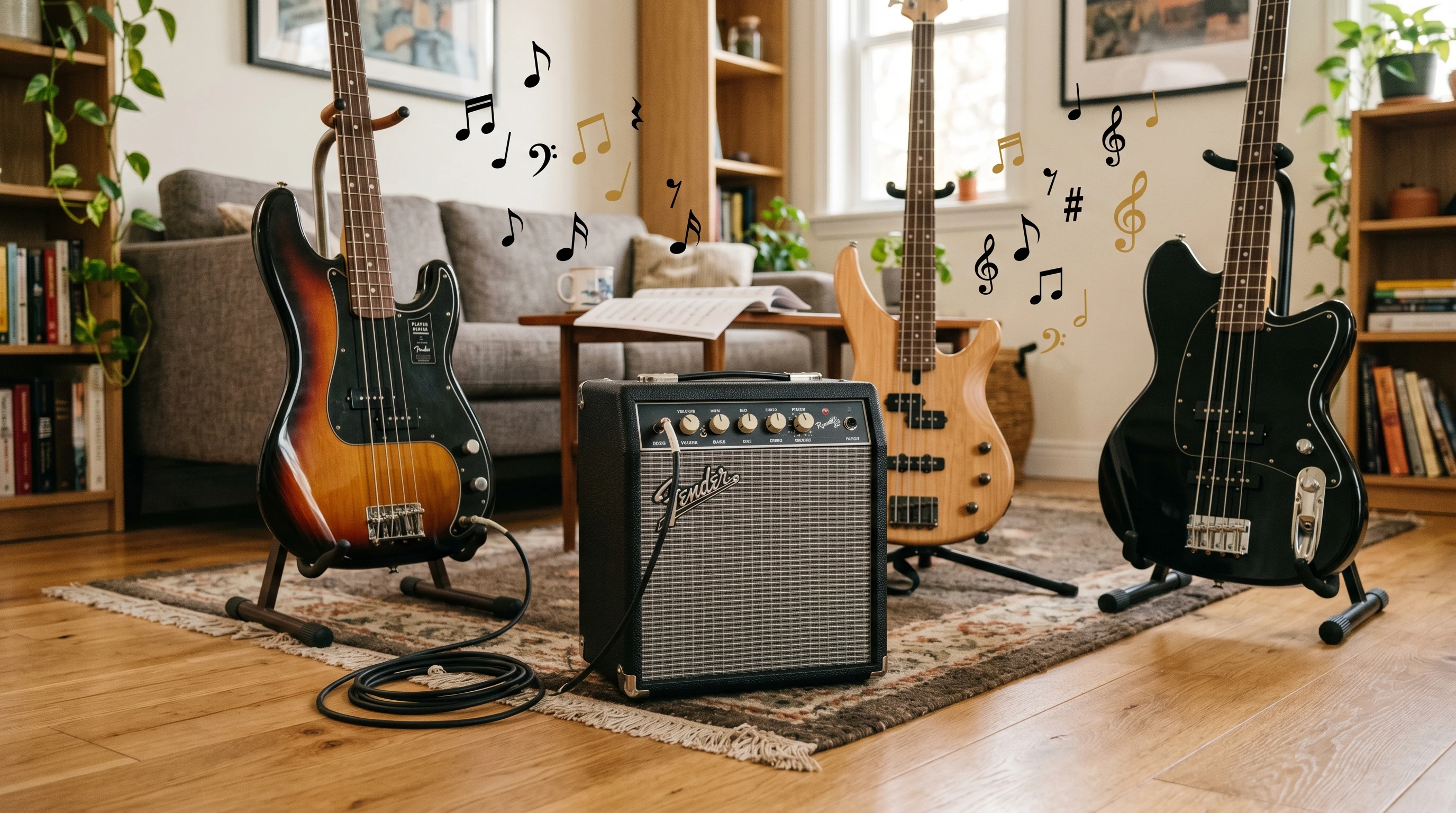
This amp is kind of a staple among new bassists. The Fender Rumble 25 gives you 25 watts of power and an 8 inch speaker, and it’s impressively light for its size. You get classic Fender tones, a built in overdrive circuit for a little grit, and a straightforward EQ. It works well for bedroom practice, and you can take it to small jams without breaking your back. The headphone out is clear, and there’s even an AUX input for playing along with your favorite songs. If you like a recognizable brand and want a bit more flexibility, the Rumble is a great pick.
GLARRY 20W Electric Bass Combo Amp
The GLARRY 20W amp is a super affordable entry point, but still gets the job done for home practice. At 20 watts, it holds up well for solo use and the tone controls (bass/treble) give you enough room to customize the sound. It’s light and simple, which is always good for new players. Plus, you get a headphone output for those moments when you need to keep things quiet.
JOYO 10W Mini Bass Amp (MA-10B)
The JOYO MA10B is a small but surprisingly powerful option. With 10 watts and a lightweight, compact build, you can play almost anywhere. The two channels (Normal/Drive) give you both a clean sound and a nice overdrive option. It’s also battery powered if you want, making it awesome for tossing in a bag and practicing at the park or during a lesson. It doesn’t have all the bells and whistles, but for the price and portability, it’s a solid starter amp.
Orange Crush Bass 25
If you want something with a bit more punch and a look that stands out, the Orange Crush Bass 25 is really popular among modern beginners. You get 25 watts, userfriendly controls, and a tight, rich sound that’s great for everything from rock to funk. The built in EQ is easy to use, and it even features a tuner and headphone output, which is great for silent practice at night. Orange amps also get high marks for durability.
Hartke HD15
The Hartke HD15 offers 15 watts and a 6.5 inch speaker. What stands out is its clear, articulate tone, which is really useful for focusing on your playing and technique. It’s not too heavy, so it’s easy to bring to your teacher’s place or a friend’s house. The basic controls are easy to figure out; just plug in and play. I suggest this one for players who appreciate more definition in their sound even at lower volumes.
Quick Guide: Getting Started With Your First Bass Amp
It’s easy to get lost in all the details, but setting up your amp is usually straightforward. Plug in your bass, set all the EQ knobs to the middle, and start playing at low volume. As you get used to the sound, you can fine-tune the EQ to find tones you like. If your amp has an overdrive or effect, play with it just for fun, but don’t feel pressured to use all the features right away.
- Start Small: Choose a lower wattage amp if you’re practicing at home. Too much volume can be overwhelming, and small amps still pack plenty of punch for personal use.
- Use Headphones: Practicing silently is a real advantage, especially if you’re in an apartment or share walls.
- Play With Tone Controls: Don’t be afraid to experiment with EQ settings. It helps you learn what sounds you like as you grow as a player.
- Stay Portable: If you’re moving your amp around a lot or taking it back and forth to lessons, lighter is always better. Amps under 20 pounds are easiest to handle.
- Practice Regularly: A good amp that’s easy to grab means you’ll play more often, which is really important for steady progress.
Things to Consider Before Buying Your Amp
There’s no allinone answer when it comes to bass amps, but making some thoughtful choices can help smooth the way for learning.
- Budget: There are amps at just about every price point. Staying in the $60-$200 range keeps it affordable but decent quality.
- Living Situation: Will you need to practice mostly with headphones? If so, check for a dedicated jack and decent sound quality.
- Durability: Beginner amps should stand up to some bumps. It’s good to read a few reviews before buying to check build quality.
- Upgrade Path: Think about whether you’ll outgrow your amp’s volume or features. Entry level amps keep things simple, but make sure it’s something you won’t want to swap after just a few months.
Wattage and Volume Needs
For a lot of newbies, it’s tempting to grab a bigger, louder amp. Honestly, you’re better off sticking to something basic and learning how to get the most out of lower volume, clean sound. If you eventually start playing with a band or gigging, then you can upgrade without spending a ton early on.
Connectivity
An AUX input is super handy. Being able to plug in your phone or a music player makes practicing to backing tracks or songs much easier and more fun. Some amps also offer USB connectivity for linking up with recording software if you want to try home recording.
Speaker Size & Tone
Larger speakers, ten inches and up, can handle more volume and deeper bass. For home use, though, smaller sizes in the six to eight inch range usually give a punchier, more controllable sound that’s easier to work with.
Advanced Tips for Maximizing Your Practice Sessions
Once you’re comfortable with the basics of setup and controls, you can get more from your amp by experimenting. Here are some things I recommend:
Try Different Genres: Adjust your EQ or use any onboard presets to match rock, jazz, funk, or even pop. This can help you figure out what bass tones you like best and brings variety to your playing.
Play With Pedals: If your amp or budget allows, try a basic effects pedal such as a tuner, compressor, or overdrive to start checking out more creative sounds.
Use Practice Routines: Set a timer and focus on specific skills each day: scales, timing, slap technique, whatever you’re into. A good amp makes sticking to routines much easier and helps your skills grow faster.
As you build your confidence and skills, your amp will become part of your voice as a bassist. Focus on enjoying the adventure, and don’t be afraid to mix it up with new settings or techniques as you progress.
Frequently Asked Questions: Beginner Bass Amps
Question: Do I need a bassspecific amp to practice?
Answer: Yes. Bass amps are made to handle low frequencies and will sound much better (and be more durable) than a regular guitar amp.
Question: How loud do beginner amps get?
Answer: Most small amps (10–25 watts) get plenty loud for home use and solo practice. You can always plug in headphones for private sessions.
Question: Can I use my amp for recording later on?
Answer: Some beginner amps have direct outputs or USB connections that make it easier to start recording at home but check the specific model for this feature.
Picking the right beginner bass amp helps you get the most out of your practice time and can really give a boost to your learning. Whether you want the classic style of a Fender Rumble, the affordability of a GLARRY, or something with a flashier look like an Orange, there’s a ton of great choices. If you pay attention to watts, portability, and the features you’ll actually use, you’ll have everything you need to start playing bass confidently at home or in lessons.
How times have changed. My first amp was a Peavy TNT followed by a Peavy TKO. They where awesome amps but not practical for practice.