
Crafting catchy bass lines with scales isn’t just about hitting random notes and hoping for the best. Scales give you a toolbox to build patterns that sound tight, interesting, and stick in people’s heads. Whether you’re plugging into a synth, thumping away on a bass guitar, or programming a track, understanding how to create bass lines using scales makes a huge difference in your music. Here’s my rundown on how to approach it from scratch, even if you’re new to scales or theory.
Why Use Scales When Making Bass Lines?
A scale is really just a set of notes that work well together. By building a bass line from a scale, you make it much more likely your lines will sound good with the rest of the song. This isn’t about sticking to rules blindly. Scales make it easier to find notes that fit under a melody, complement a chord, or just give your groove a solid backbone. Plenty of iconic bass riffs, from funk to EDM, are pretty much just scale notes played in a cool rhythm.
When I started, scales helped me get past that first roadblock: not knowing where to begin or what notes to play. Once you know your major and minor scales and get a feel for a few modes, the creative options open up a lot. You can experiment with different patterns, add tension, or bring in surprise notes for flavor. You don’t need a music degree—just some curiosity and a basic understanding of the notes in your chosen scale.
How Scales Shape the Feel of a Bass Line
Every scale has its unique sound. The major scale feels upbeat and catchy, while the natural minor scale instantly adds mood or intensity. Mixolydian and Dorian modes have a bluesy character that works great for rock, funk, and jazz. The scale you pick pretty much sets the vibe of the whole song. Try playing a bass line with just the notes of a scale, and you’ll notice how the style changes.
For example, if you use a Dorian scale in a bass riff, that raised 6th note stands out and gives the line a funky twist. Mixing up scales between song sections can completely change the mood. Even subtle moves, like switching to a pentatonic scale (which skips some notes of the standard major/minor scale), can give you a more raw, punchy sound without much effort. When you start combining different scales and experimenting, you’ll find your own voice faster.
Core Steps to Creating Bass Lines from Scales
Getting started is a lot less intimidating when you follow a simple process. Here’s what usually works for me:
- Select a scale that fits the song: If you’re not sure, the major scale is always a safe bet to test ideas. Listen to the chord progression and match it with a scale.
- Anchor on the root note: Most bass lines start by locking onto the root note (the first note in the scale). This helps keep the groove locked to the chords.
- Add stepwise movement: Use notes close to the root in the scale (like the 2nd, 3rd, 4th, and 5th scale degree) to move up, down, or walk between chords. This creates flow in your line.
- Experiment with approach notes and passing tones: Add notes that briefly connect two main scale notes—even ones just outside the scale—so the line doesn’t sound predictable or stiff.
- Mix up the rhythm: Scales set the note choices, but the rhythm gives your bass line character. Try syncopation, rests, and changing up the timing for variety.
- Listen as you build: Always check how the bass line actually sits with the beat and chords. Sometimes simple is better, and you may want to trim extra notes.
The cool thing is, once you get comfortable, you can break the rules or add chromatic notes for extra spice. But starting with scales helps keep things musical, especially if you’re working out ideas by ear without formal training. Over time, you’ll come to appreciate how scales offer a reliable starting point, giving you structure and possibilities without locking you in.
Quick Guide to Scale Types for Bassists
Knowing your scales isn’t about memorizing every shape or mode all at once. Focusing on just a few right away will already take your bass lines up a notch. Here are some that I use almost every time:
- Major Scale: Feels happy and open. Structure: whole, whole, half, whole, whole, whole, half (W-W-H-W-W-W-H). Example: C-D-E-F-G-A-B.
- Minor (Natural Minor) Scale: Feels moody or serious. Structure: W-H-W-W-H-W-W. Example: A-B-C-D-E-F-G.
- Pentatonic Scale: Only five notes, super versatile for rock, funk, and pop. Skips some scale steps for a punchy, no nonsense sound.
- Dorian Mode: Like minor, but with a major 6th degree, giving a funkier or slightly jazzy edge. Example: D to D on all white keys (D-E-F-G-A-B-C).
- Mixolydian Mode: Like major, but with a lowered 7th, which is perfect for blues and groove based music. Example: G to G on all white keys (G-A-B-C-D-E-F).
If you’ve got a keyboard or fretboard handy, try playing just the notes of one scale up and down, then improvise using different rhythms. You’ll quickly get a feel for what each one adds to a bass line. Each scale opens new doors, from jazzy licks to rock foundation, so don’t be afraid to jump in and experiment.
Practical Tips for Writing Solid Bass Lines
Here’s what’s really made a difference for me when building bass lines around scales:
- Lock in with the drums: Even if you’re focused on scales, the groove comes first. Try emphasizing the kick or snare in your bass rhythm.
- Keep it simple: Some of the catchiest bass lines use just a few scale notes and a memorable rhythm.
- Target chord tones: Match the root, third, or fifth of each chord to keep your line feeling connected to the harmony. Those tones almost always ‘fit.’
- Add fills wisely: Slide or jump to higher scale notes between sections or at the end of a phrase for flavor, not clutter.
- Use octave jumps: Plucking the same scale note an octave higher or lower adds excitement without leaving the key.
- Test with muting or rests: Silence is powerful. Try leaving out a note here and there for extra movement.
Nothing replaces experimenting by ear, but these habits help keep your lines tidy and listener friendly. Make a habit of listening back to your work. You’ll spot improvements faster and keep learning as you go.

Challenges You Might Run Into (and How to Solve Them)
Sometimes even with scale knowledge, writing a great bass line can feel stuck or too basic. Here are common snags and my favorite workarounds:
- Bass lines sound boring: Try changing the rhythm pattern, using syncopation, or jumping to notes farther away in the scale. Borrow a note from a neighboring scale for surprise.
- Not sure which scale works: Play the chord progression and hum a line—whatever notes you’re singing probably fit one main scale already. Narrow it down from there.
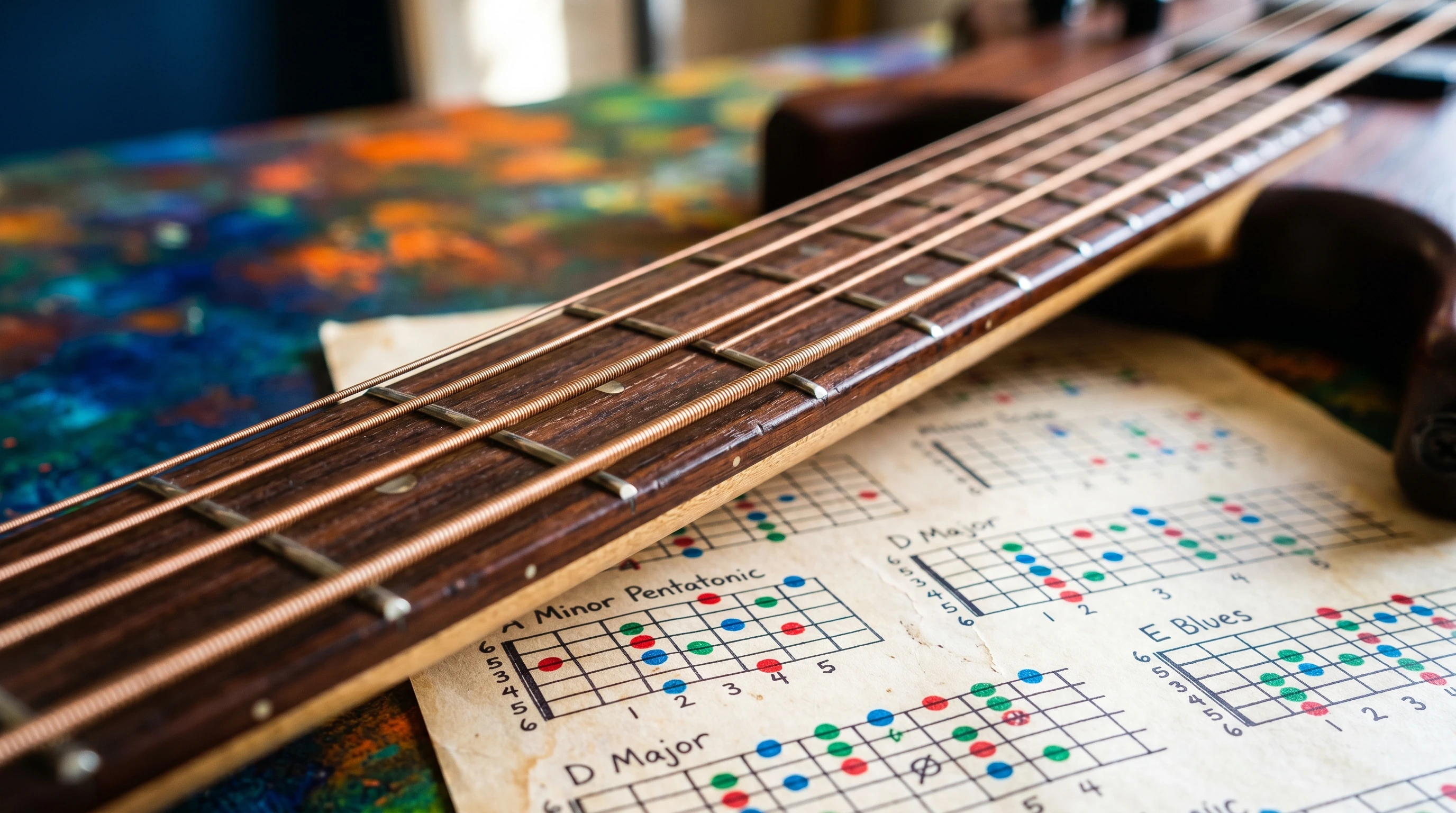
- Getting lost on the fretboard/keys: Print out a scale diagram or use an app to highlight which notes belong to your chosen scale. Visual tools help lock note positions in your muscle memory.
- Line clashes with chords: Match your root notes with the current chord. If it still sounds off, check if you’re landing accidentally on a clashing note. Listening in slow motion exposes what’s working.
Root Note Movement
Most players stick close to the root when learning, and this honestly keeps lines grounded. Building out from there, like walking from the root to fifth and landing back cleanly, already makes a line sound polished even before adding flashy bits. Over time, start building in more scale notes to add movement and interest.
Rhythmic Variety
If you catch your lines sounding robotic, record a simple drum groove and try improvising bass rhythms using just two or three scale notes. When you find a groove that feels natural, add more notes from the same scale. This exercise always helps me break monotony and find a fresh pocket. Stay flexible—sometimes the simplest rhythm feels just right, while other tracks want a busier pattern.
Approach and Passing Tones
Using notes between scale steps, especially leading into a main note or chord change, can really make things flow. Even chromatic notes—that means notes outside the scale—work as quick connectors if you land on a strong scale tone right after. This is a trick heard all over classic funk and jazz. Experiment a bit, and you’ll notice how certain non-scale notes add just the right amount of tension before returning to the groove.
Working through these challenges, step by step, will make your lines stronger and your sense of groove much more natural over time. Be patient; the more you experiment and listen, the better you’ll become at troubleshooting and building lines that really work.
Taking It Further: Tweaks and Advanced Moves
When you get comfortable with basic scale based lines, there’s a whole world of tweaks to try:
Try Modes Over Chord Changes: Modes like Phrygian or Lydian each bring their personality. Start with Mixolydian or Dorian and match them to major or minor chords in your progression for an instant upgrade in sound. Experiment with these modes in different song sections for more color and complexity.
Incorporate Slides, Hammerons, and Ghost Notes: On a real bass guitar, use slides and ghost notes for a percussive touch. On synths, add modulation or portamento for quirky movement between scale notes. Blending these subtle techniques can give your lines a unique fingerprint.
Play With Passing and Chromatic Notes: Feel free to slip outside the scale for one note if it builds up to a strong chord tone. It spices up your groove and keeps lines surprising to the listener. Don’t overdo it—just add a little for flavor.
Double Parts or Layer With Octaves: Playing the same scale-based line on different octaves layers the groove and makes the track sound bigger without extra clutter. This works especially well in a band or when producing beats in a DAW.
Practicing these techniques a little at a time soon adds up. Listening back to recordings and tweaking lines is how most pros dial in bass parts that stick in your head. Don’t be afraid to record yourself, judge the result, and try new things every session.
Real-World Bass Line Examples With Scales
Many classic bass lines come straight from simple scales. Here’s a couple I use for reference when helping friends:
- “Another One Bites the Dust” (Queen): This line mostly uses the E minor scale, anchored on strong roots and fifths, pushed by tight rhythms.
- “Good Times” (Chic): A go to for disco and funk, it’s built on E minor pentatonic and has killer use of rhythmic repetition.
- Modern EDM or hip hop bass: Often sticks to minor scales, using octave jumps, syncopation, and occasional chromatics for drama.
Trying to copy or adapt these lines—by ear or using scale patterns—helps ground the theory in real music, which is much more fun than just running up and down scales with a metronome. Stumble upon your own favorites by learning classics and jamming over different tracks.
Frequently Asked Questions
Here are the questions I get a lot when teaching people about scales and bass lines:
Question: What’s the best scale to start with as a beginner?
Answer: Start with the major and minor pentatonic scales. They’re straightforward and sound good in almost any style.
Question: How do I make my bass line more interesting?
Answer: Experiment with using approach and passing tones from the scale, tweak your rhythms, or add slides and octave jumps.
Question: Should I always stick to the scale?
Answer: Not at all. Scales give you a framework, but passing outside them for brief moments sounds great as long as you land back on a strong scale note.
Start Your Bass Line Experiments
Learning to build bass lines from scales seriously gives your songwriting and tracking skills a boost. Try jamming with one scale for a while, get creative with the rhythms, and see how the mood changes as you check out different note combinations. Being comfortable with a few main scales and how to use them opens up pretty much every style of music, even if you stray from the rules later. The more you practice listening, experimenting, and having fun with your lines, the more memorable and unique your own groove will become.