
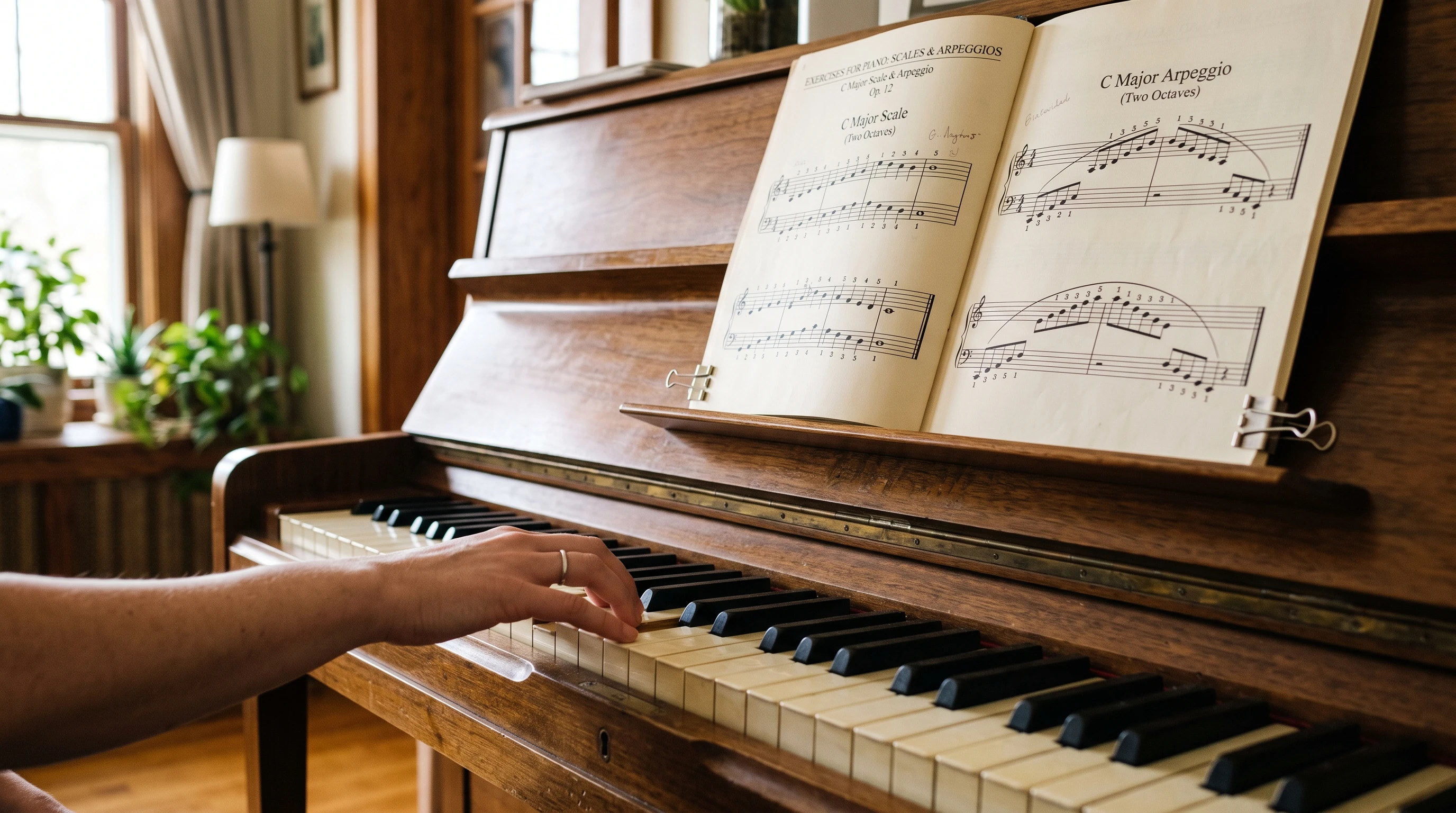
Practicing scales and arpeggios is one of those habits that pays off more than many people might think, especially for pianists and other instrumentalists. These patterns build up muscle memory, finger strength, and a deeper understanding of music theory. It’s not just about running up and down the keyboard or fretboard. These exercises create the kind of foundation that makes performing real music way smoother. Here’s how I like to get the most out of practice time with scales and arpeggios.
Why Practicing Scales and Arpeggios Really Matters
Scales are patterns of notes within a particular key and arpeggios are basically the notes of a chord, played one after another instead of together. Working on these two things goes a long way in helping you learn finger placement, smooth out transitions, and get to know keys and chords inside and out. I’ve found that practicing them regularly helps my hands “find” notes without consciously thinking. When you’re comfortable moving through all the major and minor scales, any song in any key feels a lot less intimidating (Liverpool Academy of Music).
Arpeggios are great because they train your brain to recognize and build common chords, which shows up in almost every style of music. If you’re able to play arpeggios smoothly, playing broken chords in real pieces feels so much easier (Liberty Park Music).
>
The Biggest Benefits of Practice
- Stronger Technique: Daily practice with these patterns leads to steadier hands, more even finger strength, and clean, fluid playing.
- Learning Music Faster: Lots of pieces use bits of scales or arpeggios. Practicing them ahead of time helps spot those patterns quickly, which makes sight-reading and improvisation quicker (Corinne Plays Piano).
- Warming Up: If I skip scales and arpeggios during warm-ups, I can feel it later. They’re super helpful for preventing hand injuries by getting blood flowing and muscles prepared for longer playing (Liberty Park Music).
Common Mistakes People Run Into
It’s easy to just play through a few scales, zone out, and hope for the best. I’ve caught myself doing the same thing plenty of times. A few mistakes that pop up a lot:
- Flat Fingers: Playing with straight or collapsed fingers kills control. A gentle curve, like holding a small ball, gives much better stability (Artium Academy).
- Weird Thumb Movements: When moving the thumb under or over, the motion needs to be smooth. Jerky movements slow things down and add tension (Liberty Park Music).
- Switching Fingerings: Random finger choices make it tough to keep a steady tempo or play faster later. Consistent fingerings are way more dependable over time (Artium Academy).
- Going Too Fast: Pushing for speed before accuracy is one of the quickest ways to get sloppy. Slow, careful playing sticks with me longer than rushing through the motions (Muzart Schools).
How I Practice Scales and Arpeggios Effectively
I like to switch up my practice routines to stay involved and avoid getting bored. Here are a few tricks that work well for building skills:
- One Hand at a Time: Breaking it up between each hand helps isolate problem spots and build confidence. Once both hands are independent, putting them together is a lot less stressful (Muzart Schools).
- Similar and Contrary Motion: Sometimes I play both hands moving in the same direction (similar motion) and sometimes moving outwards then back in (contrary motion). This really helps coordination.
- Bigger Range: Starting with a single octave and gradually adding more lets me reach farther comfortably.
- Change up the Rhythm: Playing scales in dotted rhythms or making every other note louder or softer keeps things interesting and builds control.
- Add Dynamics: Working on crescendos (getting louder) or decrescendos (getting softer) during scales transfers directly to music I actually want to play (Muzart Schools).
- Thumb Crossings: Practicing with a relaxed wrist and gentle finger arch around thumb crossings is key for speed and smoothness (Liberty Park Music).
Keeping Practice Sessions Interesting
I used to dread scale practice until I found a few ways to mix things up:
- Rotate Through Types: Mixing in major, minor, and less common scales (like blues or modal scales) keeps the routine fresh. I like to tackle a different set each practice session (Liverpool Academy of Music).
- Set Time Limits: Dedicating ten to twenty percent of practice time to scales and arpeggios prevents burnout, letting me spend most time working on real music. A focused ten-minute sprint is more productive than zoning out for an hour (Liverpool Academy of Music).
- Check Technique, Not Just Speed: I focus more on relaxed hands, correct wrist movement, and hitting every note clearly, rather than just racing through.
Pro Tips for Making Scales & Arpeggios Count
- Play around with accents; try making every third note louder, or accent on the first beat of each group.
- Finish strong: I end my practice with a key or arpeggio I found tough so it sticks in my memory better for next time.
- Try backwards: Playing scales descending first, then ascending, is a fun challenge that builds extra confidence in both directions.
Practical Applications and Real-World Examples
All these exercises aren’t just for showing off. Here’s where I actually notice the improvement:
- Learning New Songs: When a tough passage lines up with a scale or arpeggio I’ve practiced, my fingers just know what to do.
- Improvising: Knowing my scales means I’m never lost when jamming or playing by ear.
- Ensemble Playing: Clean scales help keep up with group pieces, especially in fast or syncopated passages.
Beyond these typical points, getting comfortable with scales and arpeggios even aids creativity. When improvising, for example, I notice that muscle memory gives me the freedom to focus more on musical ideas rather than fingerings, opening up spontaneous riffs and runs. In collaborative settings, my ability to react quickly to unexpected chord changes also comes from this type of training. Sometimes, I’ll challenge myself by incorporating complicated rhythms or unusual scales into my daily routine—like chromatic or whole tone runs—which directly influences my versatility when playing different genres, from jazz to classical to pop. Pushing boundaries in practice translates to broader skills on stage or in the studio.
Frequently Asked Questions
Question: How long should I practice scales and arpeggios each day?
Answer: I aim for around 10–20 minutes per session. Focused effort beats long, distracted practice. Quality matters more than quantity.
Question: Are scales and arpeggios just for beginners?
Answer: Not at all. Even advanced musicians use them in warmups and technical training. They build finger independence and keep technique sharp (Corinne Plays Piano).
Question: How do I know if I’m using the right fingerings?
Answer: Most method books suggest standard fingerings, and teachers can help customize when needed. If a passage feels awkward, try adjusting to find a smooth, even motion.
Foundational Gear: Things That Can Help Scale & Arpeggio Practice
Even though the main thing you need is your instrument and some focus, a few tools can make practice more effective:
- Metronome: Keeping time is so much easier, and helps build speed steadily, with a steady click in the background.
- Practice Journal: I jot down which scales or arpeggios I covered and where things got tricky to keep track of progress and new goals.
- Good Lighting and Seating: Comfortable seating and bright lighting help with posture and energy, especially for longer sessions.
Takeaways for Making the Most of Scale & Arpeggio Practice
It’s easy to treat scales and arpeggios as a box to check off during practice, but they actually make everything else easier. Smooth technique, quicker learning, and improvisational confidence all start with these building blocks. I’ve noticed the biggest gains when I stay patient, mix up my routine, and keep technique as the priority over speed. Stick to it and you’ll find your overall musicality improves faster than you might expect. Playing real music becomes just that much more enjoyable and expressive, reflecting all the solid groundwork laid with these patterns. Keep it steady and mix in some variety—the results are worth the effort.