
Bass players form the backbone of most bands, locking in with the drums and tying the musical ideas together. Simple chord progressions are the perfect playground for beginners to explore groove and timing, all while building confidence and feel. I’m sharing my go-to progressions, tips for making the most out of them, and some extra practice ideas to keep your sessions engaging and effective.
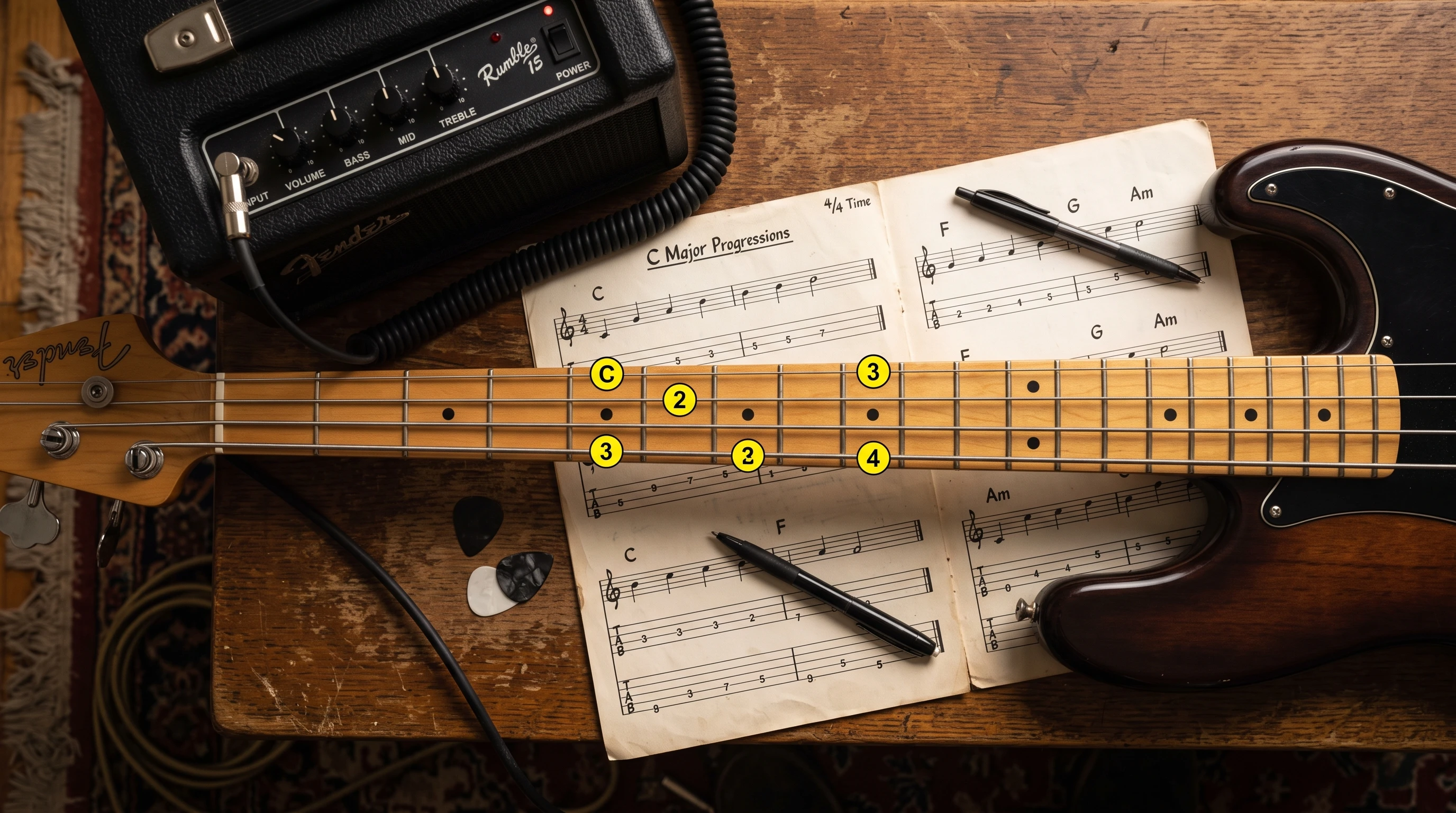
Classic Chord Progressions Every Bassist Should Try
Chord progressions are sets of chords played in sequence, creating the harmonic framework for a song. For bass players, learning simple progressions is a solid way to work on timing, rhythm, and interaction with other musicians. These patterns pop up everywhere in rock, blues, pop, and jazz.
- E, D, C: This progression sounds familiar from countless rock songs. Just playing the roots on bass gives you a solid sense of movement.
- A, D, E: One of the mostused progressions in blues and country, this 3chord set helps you get comfortable in open keys and see how chords relate on the fretboard.
- Dm7, G7, CMaj7: This is a classic ii–V–I in jazz. It might sound fancy but is really common and a great way to hear how jazz harmony feels under your fingers.
Other worth trying progressions for practice:
- G, C, D: Great for pop, folk, and early rock.
- C, F, G: Another super common structure you’ll find everywhere, from Beatles tunes to traditional songs.
- Am, G, F, E: Often called a descending progression, this has an emotional, dramatic feel and shows up in ballads and slower tunes.
Breaking Down the Role of Bass in Progressions
The bass anchors chord progressions by delivering the root of each chord. This helps everyone else in the band feel where they’re heading. At its core, playing bass during a progression means hitting those roots with solid timing. Eventually, you can add flavor notes, such as the fifth or octave, to support the harmony and give a boost to your sound.
Sometimes, bass players have a chance to walk between chords, creating a little melody on their own, even with just a couple of notes. It’s not a solo, but it definitely showcases how the bass can move the chord along in a song.
Practice Strategies for Simple Chord Progressions
The best way to get these progressions under your fingers is by practicing in a few straightforward steps. Here’s how I like to tackle things:
- Focus on Root Notes First: Start by playing just the root note of each chord. This helps you lock in with the drummer and think about groove instead of finger gymnastics.
- Add Passing Notes: Once you’re comfortable, throw in simple passing tones (like approaching the next chord’s root from a step above or below). These small steps make the bass line sound more melodic and less stiff.
- Work on Rhythm: Mix up how you play each note, try holding some out, or go for punchy, short notes. Adding rests and syncopation makes even the simplest progression feel dynamic.
- Jam with Backing Tracks: Use drum loops, guitar tracks, or any music app to give your practice context. Playing along with others, even virtually, gets you ready for a band setting and makes things way more fun.
Common Patterns and Why They Matter
Certain chord progressions come up again and again, and for a good reason; they just sound good! Being familiar with a few patterns means you’ll be better prepared for everything from casual jams to learning new songs on short notice.
- I, IV, V (like C, F, G or A, D, E): Probably the most frequently used pattern in western music. You’ll find it in blues, rock, country, and even jazz standards.
- ii, V, I (like Dm7, G7, CMaj7): The backbone of jazz, this teaches you how to move smoothly between minor and major chords.
- I, VI, IV, V (C, Am, F, G): Super popular in ’50s pop, doowop, and tons of radio hits, offering a nostalgic feel.
Learning these means you’ll feel at home no matter what style you’re exploring. Try mixing in some variety by switching up patterns and keys. This keeps practice fresh and helps you spot patterns more quickly in songs you’re learning.
Practical Tips for Building Great Bass Lines
- Keep It Simple: Especially when starting, focus on clarity and accuracy over flashy licks. Even pro bassists value clean, supportive lines.
- Listen Closely: Playing along with recordings helps you hear how bass fits with the other instruments. Try muting your track’s bass and filling the space yourself.
- Use Your Ears: Try to sing or hum the bass line before playing it. This builds musical intuition and helps you instantly spot if a note sounds right or wrong.
- Repeat and Loop: Take a short progression and loop it until it feels natural. Sometimes, five minutes on a single groove locks it into muscle memory more than hours of scattered practice. Over time, add in simple fills to make each loop more fun and prepare for real playing situations.
Dealing with Common Bass Challenges
Every beginner faces a few hurdles, and that’s completely normal. Here’s what I’ve noticed many new bassists deal with:
- Finger Fatigue: Short, regular sessions are better than marathon practices. Stretch your hands and take breaks to avoid cramps. Build up stamina gradually; your hands will thank you.
- Finding the Beat: Practice with a metronome or drumming app to develop reliable timing. Bass players who can “feel” the beat quickly become band favorites, so keep working with rhythmic tools. You can also clap along with songs to help embed timing in your playing.
- Remembering Progressions: Make cheat sheets or diagrams of your favorite progressions. Writing them down can boost memory way faster than only staring at a screen. Try drawing basic fretboard diagrams or using color coding for chords, so the shapes and relationships stick in your mind.
Experimenting with Tone and Technique
Once comfortable with the basics, I like to spice up playing by tweaking tone settings (like onboard EQs or amp dials) and playing in different positions on the neck. Using a pick, varying finger pressure, or adding slides can all change how your line fits the groove or stands out in the mix. Adding techniques like palm muting or harmonics can also give a boost to your creative toolkit.
Joining Jam Sessions and Group Practices
Practicing with others is a big confidence booster. Even if you’re learning online or through video calls, jamming with another musician (or a backing track) is a whole new experience. You’ll track down new rhythms, riffs, and even make a couple of friends along the way. Listening to different genres in jams also expands your understanding of what works on bass across styles.
Real-World Examples and Jam Ideas
Let’s say you’re working on the A, D, E progression. Try holding the root notes through each chord. After a few passes, walk up the neck between A and D, or slide into the E for a bluesier vibe. Recording yourself and playing it back is a cool way to hear your progress and catch places to improve. Setting aside ten minutes for this kind of focused recording once a week can help you notice your improvement over time.
Another approach is to pick a style, like reggae, and use a simple G, C, D pattern. Play long, ringing notes or short, percussive plucks to change the feel. The bass really drives the groove, especially in genres like funk, reggae, and punk. You can get inspired by finding famous basslines in those styles and trying to replicate their energy and tone in your practices.
Frequently Asked Questions
Here are some questions I hear a lot from beginner bass players:
Question: What’s the first thing to practice with chord progressions?
Answer: Start with just root notes, focusing on timing and evenness. Speed and extra notes can come later. Once the basics feel solid, you can move on to adding fifths, octaves, or even chromatic runs for fun.
Question: Do I need to learn music theory to play bass in a band?
Answer: Not really, but a little knowledge helps! Start by learning the names of notes on your fretboard and how they connect in songs. Over time, you’ll pick up patterns naturally and connect the dots between what you play and what you hear in recordings.
Question: What if a song has weird or unusual chords?
Answer: Play the root note and listen for possible approaches. Sometimes, using your ear and trusting the groove is better than worrying about the “right” scale. Don’t be afraid to experiment; often, teachers and pros develop strong instincts through lots of trial and error, not just by sticking to rules.
Bottom Line
Simple chord progressions are the perfect starting point for building up your bass confidence and musicality. By focusing on root notes, learning a few patterns by heart, and playing along with backing tracks or friends, you’ll quickly notice improvement. The more you jam, experiment, and listen, the more the bass becomes a natural part of how you think about music. Stick with it, make your practice routine fun, and you’ll be playing solid lines and holding down the groove before you know it!