Bass guitar tabs can open up a whole new world for anyone wanting to play popular songs without spending years learning traditional music notation. As a beginner, you’ll find tabs are pretty straightforward once you know the basics, and they’re a super useful tool for learning quickly. Here, I’ll walk you through how to read bass guitar tabs step by step, including the key things you want to watch for as you start playing your favorite tunes.
Understanding What a Bass Guitar Tab Looks Like
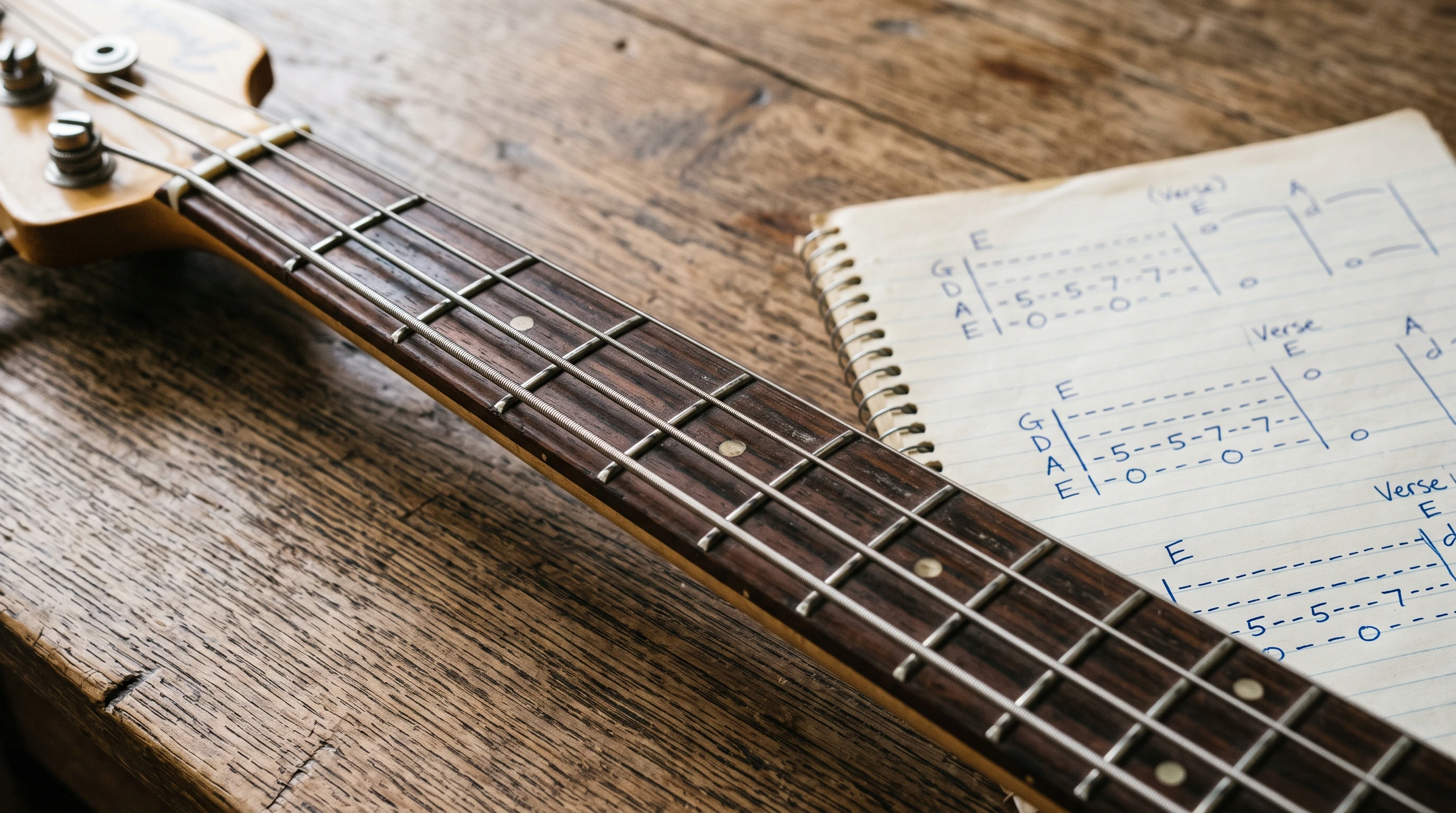
A bass guitar tab (or tablature) is really just a visual way of showing you which notes to play, not with traditional notes, but as a picture of the strings and frets. These tabs make things feel way less intimidating, especially for brand new bassists who want to get into playing quickly.
Each bass tab uses four horizontal lines stacked on top of each other. These lines represent the four strings of a standard bass guitar (from the highest sounding string to the lowest):
- G (top line): The thinnest and highest-sounding string
- D (second line): The next lowest
- A (third line): Second-thickest string
- E (bottom line): The thickest and lowest-sounding string
Numbers get written right on these lines. They tell you which fret you need to press down. A “0” just means you play that string open (no finger on any fret). It’s a simple way to show exactly where your fingers should go.
Getting Comfortable With Tab Notation Symbols
Bass tabs use a few key symbols to show different playing techniques. Learning these early really helps you play more like the original song, so you capture the right feel and sound. Here are some symbols you’ll see a lot:
- h – Hammer-on. Example: 5h7 means play the 5th fret, then hammer your finger quickly on the 7th fret (same string) without plucking again.
- p – Pull-off. Example: 7p5 is just the reverse of hammer-on. Play the 7th fret and pull your finger off to let the 5th fret ring.
- / or \ – Slide up (/) or slide down (\). If you see 5/7, play the 5th fret and smoothly slide up to the 7th.
- b – Bend. Not as common in bass lines, but sometimes it pops up. It tells you to push or pull the string up or down for a pitch bend.
- x – Muted note. Looks like an ‘x’ on the string. Lay your finger lightly on the string, pluck it, and you’ll get a percussive thump instead of a note.
There are other symbols out there, depending on the style you’re playing, but these are the key ones beginners will spot on most popular tabs.
Step-by-Step: How to Read And Play a Bass Tab
Getting started is all about slow, deliberate practice. Here’s the process I’ve found works best, especially if you want to figure out your first full song on bass:
- Pick a Tab: Choose a beginnerfriendly bass tab, like “Seven Nation Army” by The White Stripes. Simpler songs make it easy to follow along.
- Identify The Strings in the Tab: Remember, the top line is the G string, and the bottom is E. Double-check your guitar is tuned to standard bass tuning (EADG).
- Read Left to Right: Start at the far left and move across the tab one character at a time. Numbers on lines show what to play in order.
- Play the Numbers: When you see a number, put a finger on that fret, and only that fret, on the indicated string. Pluck the string with your right hand, or whichever plucking style you prefer.
- Watch Out for Symbols: If you hit an “h,” “p,” or slash, do the technique right after playing the original note.
- Keep Track of Timing: Tabs don’t always show rhythm. Listen to the song or look for rhythmic notation (sometimes written just above the tab), so you play in time.
If you keep it slow at first and focus on accuracy, you’ll build up your muscle memory. Speed comes naturally as you get more comfortable.
How Rhythm and Timing Work in Bass Tabs
One thing you’ll find quickly is that, unlike traditional sheet music, most tabs don’t spell out rhythm very clearly. That means you need to pay attention to how the song actually sounds, especially if the tab doesn’t include rhythm cues.
Some tabs include stems or flags, like little rhythm guides above the numbers or lines, especially for trickier parts in a song. When they’re not there, here’s what can help you:
- Listen to the song: Play the track and match your notes to what the bassist is doing. Pause and rewind as much as you need.
- Tap your foot: Most basslines follow the beat of the drums. Counting along can keep you in the groove and help with timing.
- Write in your own hints: You can draw slashes, dots, or make up markers right on your printout to keep the timing straight.
It takes some practice, but learning to feel the timing makes every song you play sound a lot better. Over time, your ear for rhythm will grow just from learning songs this way.
Common Beginner Mistakes and How to Avoid Them
Early on, it’s easy to miss small details in tabs or get stuck on things that seem confusing. I’ve made plenty of mistakes (and still do sometimes), so here are a few things you want to keep an eye out for:
- Skipping past the legend or symbol key: Some tabs explain the symbols they use right at the top. Look for that mini-guide before starting.
- Forgetting to tune: Playing on an untuned bass makes every note sound off. Always make sure your bass is tuned to EADG before starting.
- Mistaking which way is up: Remember, the top line in the tab is your thinnest string (G), not the thickest (E).
- Ignoring finger placement: Tabs tell you which fret, but not which finger. Try to use your index, middle, ring, and pinky finger along the four lower frets to help reduce hand movement.
- Overlooking muting: Muted notes add groove and punch to basslines, so paying attention to those “x” notes helps your playing sound clean and tight.
Starting out with these good habits saves you lots of frustration and sets you up for faster progress as you switch up to more advanced songs or techniques later.
Practical Tips for Learning Songs With Tabs
Once you understand how tabs work, you’ll probably want to get into some real basslines right away. These are great ways to make learning new songs less frustrating and a whole lot more fun:
- Break the song into chunks. Focus on one section (like a verse or chorus) before trying the whole piece.
- Practice slowly. Speed isn’t important at first; being accurate is more important. Most of the best bass players started out playing very slowly.
- Loop tricky spots. Play harder parts over and over until they feel comfortable, then add them back into the full song.
- Use a metronome. This helps you keep a steady beat and builds your internal timing.
- Don’t be afraid to pause videos: YouTube has great tutorials and playalongs. Slow the speed or pause if you need to watch finger movements a couple of times.
A lot of beginners find it easier to read tabs side by side with a video lesson, so try that if you get stuck.
Recommended Beginner Bass Tabs to Try
Jumping into a handful of easy tabs helps you practice the basics before taking on lines with more notes or complicated rhythms. Here are a few songs I always recommend for new bass players:
- “Smoke on the Water” – Deep Purple
- “Another One Bites the Dust” – Queen
- “Seven Nation Army” – The White Stripes
- “Come As You Are” – Nirvana
- “Sunshine of Your Love” – Cream
All these use simple rhythms plus lots of open strings, making them perfect for practice sessions and not too overwhelming for beginners. As you get more comfortable, you can move on to more challenging songs from there.
Frequently Asked Questions
There’s no shame in looking for answers as you get started. I get a lot of questions from beginners who are learning how to read bass tabs. Here are a few I hear a lot:
How do I know which finger to use on each fret?
Most beginner guides suggest using your index for the first fret, middle for the second, ring for the third, and pinky for the fourth. As you get more comfortable, you’ll figure out what feels best for you.
Are there tabs for 5- or 6-string basses?
Yes, you just add extra lines for higher or lower strings. If you have a 5-string, there’s an additional line below the E for the low B; for 6-string, one above for the high C. Check the type of bass the tab is for before you start playing.
Can I find tabs for pretty much any song?
Most popular songs have tabs online, on sites like Ultimate Guitar or Songsterr. Always double-check if the tab looks accurate, since some are user-submitted and might have some errors.
Putting It Into Practice: My Experience With Learning Bass Tabs
The first time I tried learning a song from a bass tab, I’ll admit my timing was all over the place and I forgot which string was which more than once. But just using tabs again and again made a big difference in my ear training, my coordination, and my confidence. Now, I pull up a tab almost every time I want to figure out a new song or jam with friends.
Tabs aren’t the only way to learn, but they are a very friendly starting point, especially if you’re new to the world of bass guitar. The more you put them to use, the more natural reading tabs will feel—so keep at it, and soon you’ll be figuring out songs by ear, too.