
Bass scales are the backbone of most songs you’ll ever play on bass. Getting the hang of a few simple scales is a smart way to build your skills, even if you’re just picking up a bass for the first time. If you want to jam with others, write your own lines, or just understand how music works, knowing some basic scales will give you a big boost. I’ll walk you through what these scales are, why they matter, how to practice them, and all the mini-hurdles that pop up when getting started.
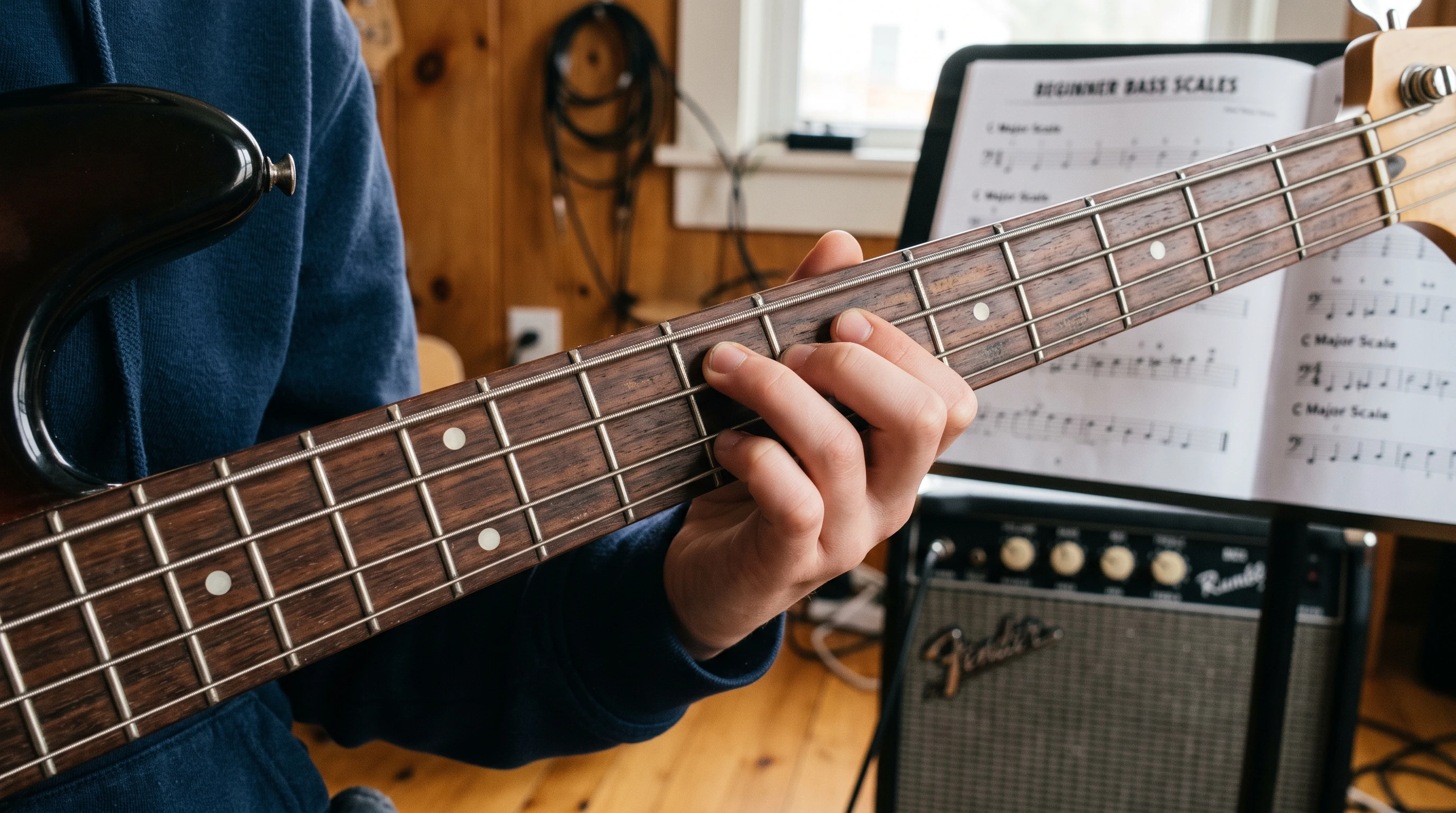
Why Learning Bass Scales Makes a Difference
Scales are basically sequences of notes that create the building blocks of bass lines, hooks, and solos. Learning them helps you:
- Recognize notes in a key: Makes it way easier to follow along with songs or write your own parts.
- Boost finger strength and reach: Regular scale practice gets your fingers in shape to move smoothly up and down the neck.
- Train your ear: You start to recognize musical patterns, which is really important for improvisation and jamming.
- Communicate with other musicians: Talking about musical ideas using scale names lets everyone stay on the same page in rehearsals or on stage.
Bass scales might look simple on paper, but running through them daily will seriously bump up your playing confidence and make the entire fretboard feel less mysterious.
Start With These Five Beginner Bass Scales
There are a handful of scales that keep showing up in all sorts of music; pop, rock, blues, funk, and many more. I’ll break down the five that every new bassist should learn first:
- Major Scale (C Major shown here):
Formula: Whole, Whole, Half, Whole, Whole, Whole, Half steps
Notes: C D E F G A B C
Sound: Bright, upbeat, classic
Use: Appears anywhere you hear a “happy” or energetic bass line. - Natural Minor Scale (A Minor example):
Often starts from the 6th note of its relative major scale.
Notes: A B C D E F G A
Sound: Moody, a bit sad, perfect for ballads or darker songs.
Use: Great for a more emotional bass groove. - Major Pentatonic Scale (C Major Pentatonic):
Formula: 1, 2, 3, 5, 6
Notes: C D E G A C
Sound: Clean and melodic
Use: Cool for solos and simple bass lines, fits into loads of genres. - Minor Pentatonic Scale (A Minor Pentatonic):
Formula: 1, b3, 4, 5, b7
Notes: A C D E G A
Sound: Bluesy and kind of raw
Use: The default scale for rock, blues, and funk grooves. - Minor Blues Scale (A Minor Blues):
Takes the minor pentatonic and adds an extra note called the “blue note.”
Notes: A C D D# E G A
Sound: Unmistakably bluesy and expressive
Use: Lets you add a touch of attitude, especially in blues or classic rock.
How These Scales Fit Into Music
Practically every catchy bassline uses notes from one or more of these scales. If you want to break down your favorite riffs or write something original, it really helps to know which notes ‘fit’ before you start experimenting. Picking the right scale shapes also trains your brain and fingers to move together, making complicated songs feel much easier after some practice.
Simple Patterns to Get You Started
A lot of beginners worry about reading complicated sheet music, but you don’t need fancy music theory to start playing scales. Here’s a quick cheat sheet for standard fretboard patterns, starting on the E string. (You can move these shapes anywhere to play in different keys.)
- Major Scale Pattern:
Start on any fret of the E string, then follow this pattern:
2 frets up, 2 frets up, 1 fret up, 2, 2, 2, 1.
Use one finger per fret to keep your hand relaxed. - Minor Scale Pattern:
Very similar pattern, but with a different spacing; feels pretty natural under your fingers once you play it a few times. - Pentatonic Patterns:
Five note repeating patterns, which are super easy to move around once you lock them in.
Using fretboard diagrams or online scale generators is handy if you want to see these shapes visually. Apps like Fender Play and websites like StudyBass have free diagrams you can check out to get a feel for each pattern.
Easy Ways to Practice Your Scales
The best way to get these down is with short, focused daily practice sessions. I find ten minutes spent slowly running up and down a scale is better than an hour trying to cram a bunch of info all at once. Here’s what helps most players get results:
- Start slow. Use a metronome or drum machine to keep things steady.
- Play scales both ascending (lowest to highest note) and descending (highest to lowest).
- Use all four fingers on your fretting hand. This builds strength and accuracy fast.
- Move the scale up and down the fretboard to practice different keys and positions.
- Try creating your own short bass lines using only the notes from each scale. It’s a fun way to make scales feel less like an exercise and more like music.
If you want to improvise or create your own riffs, jamming along with a simple backing track or looper pedal can bring your practice sessions to life. Messing around with different rhythms within the scale is a solid way to develop your style. Sometimes, playing along with drum loops makes scale exercises feel more musical and enjoyable, especially if you’re trying to build confidence improvising. Remember, short and consistent practice beats long, infrequent marathons every time.
Bass Scale Challenges and How to Overcome Them
- Finger Fatigue: Your hand gets tired fast at first. Pausing to shake your hand out and coming back after a few minutes of rest keeps things safe and comfortable.
- Remembering Patterns: Repetition is your friend. Running through the same scale shape every time you pick up your bass helps with muscle memory.
- Stuck on One Key: Transpose the same pattern to different starting frets. This way you’re not just stuck in C or A but begin to unlock the whole neck.
- Staying Motivated: Setting tiny goals, like mastering one shape a week, makes progress easier to track.
Finger Fatigue
Stretching before you play and keeping your thumb roughly behind your second finger (when possible) makes a big difference. Switching to lighter gauge strings helps too if your fingers are sore after playing. Take breaks and shake out your hand if you notice any discomfort; this prevents fatigue from slowing you down.
Remembering Patterns
Drawing quick sketches of the fretboard or using stickers can help some folks. For others, singing or humming the scale as you play it cements the notes faster. It’s really about mixing repetition with whatever helps you learn best. Consider recording yourself and listening back to pick up on spots needing more practice. Over time, your fingers and ears will begin to move together without thinking.
Stuck on One Key
If you practice only in one position, songs in other keys feel a lot harder. Challenge yourself by picking a different fret to start with each day and move your classic major, minor, or pentatonic patterns up or down the neck. The goal is to make every part of the fretboard comfortable and familiar.
Staying Motivated
Celebrating when you nail down a new pattern or play along with a favorite song using just those scale notes keeps you excited to come back the next day. Playing with friends or over YouTube jam tracks is another good way to keep things interesting. And, if you ever feel stuck, try switching up your practice routine—learn a new song, try a different genre, or just jam freely for a few minutes to refresh your excitement.
Bass scales aren’t just theory; they’re super useful tools. Getting comfortable with just these few shapes unlocks a ton of music and lets you tackle new riffs or improvise at your own pace. The more you practice, the more fun you’ll have. Don’t worry about learning everything overnight. Start simple, keep going, and you’ll be surprised at how quickly it clicks. Over time, you’ll stumble upon connections between different scales, giving you even more freedom on the fretboard.
Common Questions About Bass Scales
Question: Which scale should I learn first on bass?
Answer: The major scale is the best place to start. Once you’re comfortable with that pattern, add minor and pentatonic scales to your toolbox.
Question: Do I need to read music to play bass scales?
Answer: Not at all. Fretboard diagrams and tab notation show scale patterns really clearly, so you can start with just a little visual help and play by ear too.
Question: How long before I see improvement from scale practice?
Answer: Most beginners notice better finger strength and more reliable note targeting after a couple of weeks. Consistency is way more useful than marathoning scale practice once in a while.
Practical Gear for Bass Scale Practice
While you don’t need much to get started, a few gadgets can make your practice much smoother:
- Tuner: Staying in tune keeps scales sounding right.
- Metronome (or a metronome app): Helps you keep steady timing, which is really important for band settings.
- Good quality cable and amp: Hearing your notes clearly makes a big difference.
- Notebook or practice diary: Tracking what you’ve worked on helps you stay focused and motivated.
- Bass tab and backing track apps: Tools like Ultimate Guitar Tabs or iReal Pro can make finding scale practice tracks faster.
If you want to get further into bass scales, resources like StudyBass, Scott’s Bass Lessons, and Fender Play have a ton of videos and printable diagrams. These help make learning way less intimidating, and you might track down extra tips or tricks from experienced bassists around the world. Joining online forums or music communities is also a great way to stay inspired and get feedback on your progress. With steady practice, patience, and a willingness to experiment with new patterns and techniques, your understanding and mastery of bass scales will keep growing every day.